Have You Found What You Are Looking For?

A couple thousand years ago, there were some devout followers of God. They were in search, somehow, with all their resources, to an answer that many looked forward to across the ages. A leader to establish a Kingdom that would reign for eternity. 

It was as if these seekers knew without a doubt that something was up. It could have been culture and society that pointed to a certain time of arrival. It might have been ancient writings that described a prophetic calendar that matched up to this moment. Other leaders began to speak of a certain time being near.  Whatever it was, these men used all that they had at their disposal. They watched the stars. They read the manuscripts. They waited in anticipation, and then, one day, God, Himself, clearly pointed the way. 

-Now after Jesus was born in Bethlehem of Judea in the days of Herod the king, behold, wise men from the east came to Jerusalem, saying, 

“Where is he who has been born king of the Jews? 

For we saw his star when it rose and have come to worship him.” 

Out of the East, some peculiar men began a journey. After putting aside all their other ambitions, appointments, and family commitments, they began a journey to find a king. They found “ a King,” but what they were looking for was not in this place. 

-When Herod the king heard this, he was troubled, and all Jerusalem with him; 

I believe here in America, we have stopped searching for a King. After all, we pride ourselves on winning the war between the tyranny of an earthly king and the rights of individuals. This is empowering. This brings freedom. 

However, this also makes us kings of our own realms. We might not be searching for a king, but like the wisemen, with all the resources and knowledge at their disposal, we are looking in the wrong place for a king. We look to ourselves in our seeking. Like the wisemen, we need direction from the Word of God.

-and assembling all the chief priests and scribes of the people, he inquired of them where the Christ was to be born. 

They told him, “In Bethlehem of Judea, for so it is written by the prophet: 

“‘And you, O Bethlehem, in the land of Judah, are by no means least among the rulers of Judah; 

for from you shall come a ruler who will shepherd my people Israel.’” 

These men found direction from both the sky above and the ancient texts from below. On their journey, the Word of God points them the correct way, while another King has motives of his own.

-Then Herod summoned the wise men secretly and ascertained from them what time the star had appeared. 

And he sent them to Bethlehem, saying, 

“Go and search diligently for the child, and when you have found him, bring me word, that I too may come and worship him.” 

After listening to the king, they went on their way.

With knowledge and direction, these three wisemen, who might have been kings themselves, seek after the greatest treasure to be found. All of their encounters, all of their travels, lead them to this point. Their reaction explains what they have found.

-When they saw the star, they rejoiced exceedingly with great joy.

And going into the house, they saw the child with Mary his mother, and they fell down and worshiped him. 

The mystery in this search for a king has now been revealed. The reaction is exceedingly great joy and worship of the true king. What they searched for, they found.

-Then, opening their treasures, they offered him gifts, gold and frankincense and myrrh. 

And being warned in a dream not to return to Herod, they departed to their own country by another way. 

Have you found what you have been looking for? You might even think to be a wise king yourself.

Do you have exceedingly great joy and satisfaction as you rule the day? 

I believe Jesus Christ, the true King, is what you might have been searching for. 
Teaching Students to Stop Waiting for the World to Change

By Tim Elmore

Original Article Here

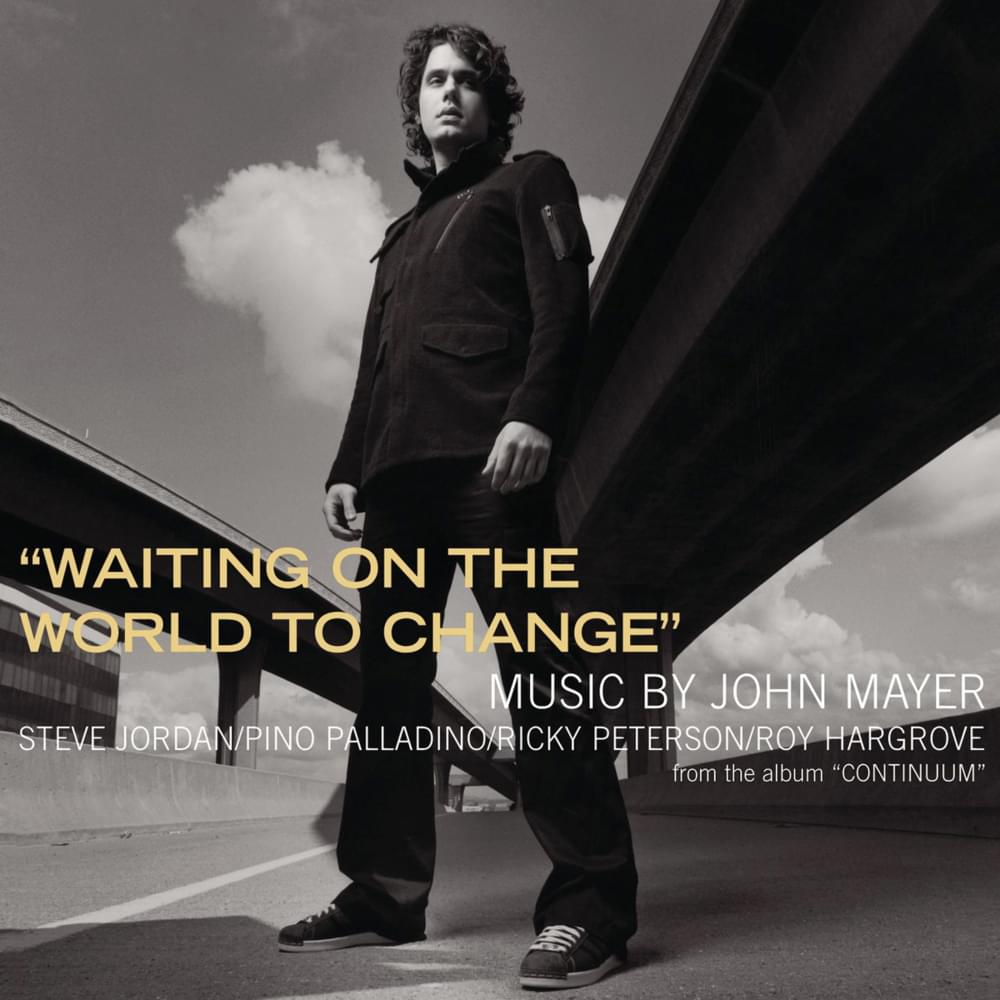
Back in 2006, musician John Mayer released a song for millions of twenty-first century young adults. It was called, “Waiting on the World to Change.” 

While the tempo is upbeat and cheerful, the lyrics represent a melancholy, even despondent mood. They express a powerlessness to make any difference; that the power lies with “the man.” So, our job, Mayer notes, is to wait for the needed change. Instead of taking charge of our lives, we’re encouraged to just wait for external change to happen. 

This may explain the cynical, even jaded, mood of millions from Generation Z.

A Shift in Culture 

Over the last sixty years, young people have slowly drifted toward this mindset. Research psychologist, Dr. Julian Rotter, created a scale to measure whether graduates were entering their careers with an external or internal locus of control. Here’s what he measured: 

  • Internal locus of control represents a mindset that believes that you are responsible and in control of your own success. 
  • External locus of control represents a mindset which believes that somehow fate or external forces control your outcomes. 

Interestingly, nine years into his research, Dr. Rotter discovered that those who maintain an internal locus of control become measurably more successful in life. They take better care of their health and fitness, their marriage and family, their job and career. It makes sense. If we believe our success is up to us, we take ownership of our behavior and attitude. This is good news. The bad news, however, is sobering. Since Julian Rotter first administered these evaluations in 1954, students have shifted toward an external locus of control. They’re looking outward to someone else to ensure their success—mom, dad, employer, counselor, or coach. 

We can only assume why this might be. Perhaps students are scared or uncertain about life. It might be that they’re simply overwhelmed. Maybe they think no one is really in control. This, however, leads to feeling like someone else owes you. 

Are We Benchwarmers?

Consider this: We approach life either as players in the game or substitutes on the bench. 

Athletes feel something completely different based on whether they are in the competition or on the bench during a tough game. From the bench, you can yell and scream, stand up, or squeeze a towel in your hands, but that’s it. You can’t directly impact the outcome when you’re not actually playing. It’s only when you’re in the game, playing, that you feel different. 

The key shifts we must help students make to return to an internal locus of control are:

  1. How they see their life (their perception).
  2. How they approach their life (their practice).

They must stop looking at externals that may go wrong. That’s not in their control. Life will give us lemons, as they say. Where students must focus is how they perceive it all, concentrating on their responses to the lemons, not the lemons themselves. That’s in their control. Once they nail their perception of life, maintaining a “control the controllable” mindset, life gets better. 

Next, they must act in response to that internal mindset.  

Arthur Brooks, one of my favorite authors, recently released a book called Build the Life You Want. In it, he tells the story of his mother-in-law who, at age 93, was one of the happiest people he’d ever known. Her name was Alpina, and she lived in her room alone, impoverished, and dying after a long life. But she was happy. The reason? Somehow, at age 45, “she stopped waiting for the world to change and took control of her life.”

How Do We Do This?

First, Alpina began to look for decisions in her life where once there were only impositions. For example, Alpina once felt she was stuck in a bad job at a pitiful company. Then she awakened to the fact that she’d been CEO all along. She couldn’t snap her fingers and all would be perfect, but she had power over her own life wherever it was, embracing an internal locus of control. 

Second, she took action based on that realization. She switched from wishing others were different to working on the one person she could control: herself. The choices she made, not her feelings at the time, led her to transform less productive emotions into positive ones like humor, gratitude, hope, and compassion. Happiness was not a chase but a choice.

Third, managing herself freed Alpina to focus on the foundations on which she could construct a much better life: her family, her friendships, her work, and her faith. Instead of numbing the pain anyone can feel inside, these types of people think and act differently. Oprah Winfrey calls them the “people who have every reason to be unhappy and yet are not.” They’re the “lemonade-making, silver-linings-finding, bright-side-looking, glass-half-fullers.”

This completely removes the chore of waiting for the world to change.