“Glory to God in the highest heaven, and on earth peace to those on whom his favor rests.”
Luke 2:14, NIV
THINK ABOUT THIS
Best Christmas Ever is a series designed to help students recognize that the best things about Christmas aren’t the things we typically tend to remember first during the season. They’re the things God did for us thousands of years ago. Though encouraging students to embrace abstract concepts like the fact that God is with them and wants to know them may be difficult for some middle schoolers to grasp, it’s important to help them recognize these key elements of what Christmas is all about. These are things they can celebrate and understand as they grow in maturity and relationship with God.
Daily Cues
Morning Time
Take time to celebrate the person who spends a lot of their time with your middle schooler: their Small Group Leader! Write them a card, shoot them a text, give them a call, or put together a little Christmas gift for them to show your appreciation for how they invest in and care about your kid.
Drive Time
Let each member of your family share what activity would make their Christmas the best Christmas ever! Maybe it’s a Christmas movie marathon, a drive to see holiday lights, a special treat made at home, or a chance to serve someone else. Whatever it is, let each person choose their best Christmas ever activity and then, make an effort to do each one this holiday season.
Meal Time
Make an effort to bless others this holiday season. Choose a day to make Christmas cookies, cards, candy, or another holiday treat together as a family. Then, deliver them to your neighbors to spread a little Christmas cheer to those around you this week.
Bed Time
Read the Christmas story together as a family this week (Luke 2:2-20). After you read, discuss some of what you read as a family. Talk together about what this story means for you today and how you can remember it during the holiday season.
There’s reality behind the story and history of Santa Claus.
There actually was a man known as Nicholas who was born in AD 280 in Asia Minor, which is modern-day Turkey. He was bishop of the church in Myra, participated in the First Council of Nicaea, and helped the church find the best language to describe the Incarnation of Jesus.
St. Nicholas was beloved because he spent his life helping the poor and underprivileged. He was the first to initiate programs for mentally challenged children. His love for children led him to visit their homes at night disguised in a red-and-white hooded robe to leave gifts of money, clothing, and food in their windows or around their fireplaces.
After his death, he was made the patron saint of sailors since his church was located in a port city and had an extensive ministry to those who traveled the sea. He was later named the patron saint of Russia. Nicholas was one of history’s most venerated saints, with more than five hundred songs and hymns written in his honor. Christopher Columbus arrived in Haiti in 1492 and named the port after him. By the year 1500, more than seven hundred churches in Britain were dedicated to him.
The Dutch especially appreciated his life. They spelled his name Sint Nikolass, which, in America, became Sinterklass, or Santa Claus.
His popularity grew through a poem written by Dr. Clement Clark Moore, a theology and classics professor at Union Seminary in New York. In 1822, he penned the classic, “A Visit from St. Nicholas,” better known today as “The Night Before Christmas.” Artist Thomas Nast illustrated the book, creating the figure we now know as the jolly Santa Claus.
That’s the reality behind the story of Santa Claus. St. Nicholas’ selfless lifestyle was based on his love for God and people.
Now, let’s look at the actual Christmas story and why it should matter so much to our lives.
Christmas nativity scenes all over the Christian world will once again be unpacked and displayed to relate the story of that glorious first Christmas: a beautiful young woman protected by her equally attractive young husband, adoring shepherds with their sheep, and three majestic kings from the Orient bearing their magnificent gifts for the baby lying in a manger.
But very little that blessed night happened the way our decorations depict it. Let’s discover why.
Why do we celebrate Christmas on December 25?
According to our traditions, Santa Claus visits our homes on December 24, Christmas Eve. And we celebrate Jesus’ birth on December 25. But, do we know why we observe Christmas on that day?
The night Jesus was born, the Bible tells us that the shepherds were in the fields tending their sheep (Luke 2:8), something they did not do in the winter. The Roman census, which brought Joseph and Mary to Bethlehem, would not have been possible in winter either.
It is most likely Jesus was born in the springtime. Early scholars estimate the time around March 25 or sometime in April. But Christmas was not celebrated as a holiday for nearly four centuries.
For many years, the Romans had celebrated the “birthday” of the sun each year on December 25 since that date is near the winter solstice in the Northern Hemisphere. It’s the beginning of the winter season. Pagan festivals marked the occasion for centuries before Christians began using the “birthday” of the sun as the birthday of the Son.
By 1038, the Mass of Christ was called Cristes Maesse, from which we get the word “Christmas.” In 1223, St. Francis of Assisi assembled the first nativity scene.
And so Jesus’ birthday is celebrated on December 25, and St. Nicholas is the “patron saint” of the holiday.
As Paul writes to his younger companion, he relays various “trustworthy sayings” to Timothy.
2 Timothy 2
11 The saying is trustworthy, for:
If we have died with him, we will also live with him;
12 if we endure, we will also reign with him;
if we deny him, he also will deny us;
13 if we are faithless, he remains faithful—for he cannot deny himself.
Trying to paint the picture in my mind, I envision a wise champion of the faith relaying simple truths that may have carried him on his faith journey. We find Paul bringing understanding through strong statements of faith. The certainty of Christ with us and living in His resurrection power. The endurance gained as the eternal perspective of the Kingdom of God will come to reign. Then, right smack in the middle, the divide between our humanity and a Holy God gives comfort in a different way. Our confession with or without Christ results in denial, as we deny Him.
Lastly, a paradox of sorts. “IF WE ARE FAITHLESS,” if WE FAIL, if WE RENIG on our side of the bargain, if WE LOSE SIGHT and miss the mark, WE DO NOT IMPACT THE CONSISTENT, SOLID, BEDROCK of our FAITHFUL CREATOR.
“FOR HE CANNOT DENY HIMSELF.”
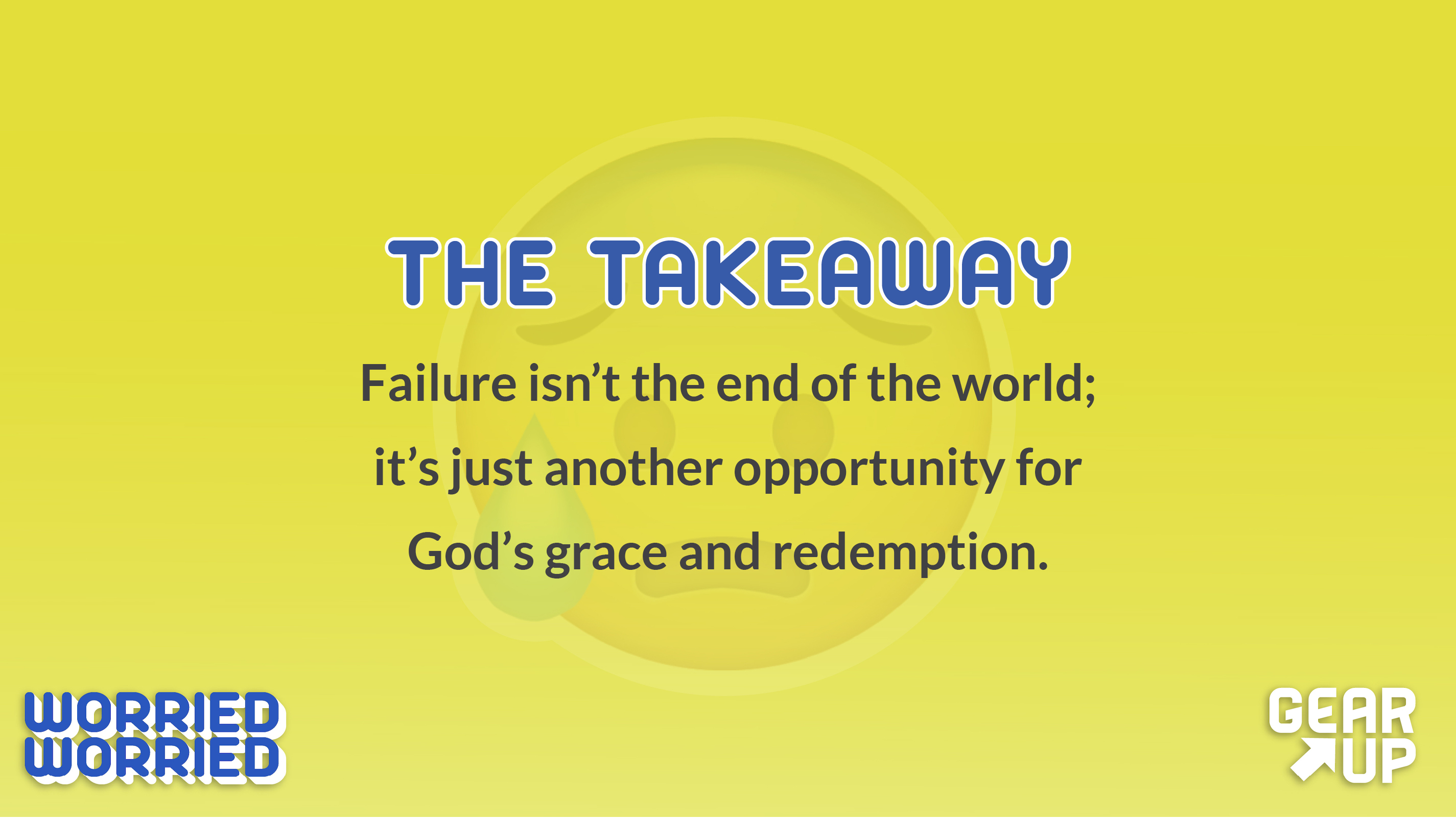
As you look at your past, as you remember your failures, put your hope in the one that REMAINS FAITHFUL. Find the same qualities in the Savior that gifted you eternal life from the start. Receive GRACE and REDEMPTION once again. Walk in newness of life, and find confidence again. Don’t worry, He’s got it.
Middle school has always been stressful, but research tells us that teenagers today are facing more pressure than ever before. Juggling the changing demands in grades, relationships, and growing responsibilities places our teens at a much higher risk for stress. But some students are experiencing more than stress—they are struggling with anxiety.
Click on the Download for a Parent Conversation Guide brought to you by the Parent Cue
For the next 2 weeks we are talking about three things on Wednesday Nights – PRAYER, CARE, & SHARE.
Greg Stier with DARE 2 SHARE encourages us to reach out to those around us during this pandemic by starting with PRAYER. Are there any people that come to your mind in your circle of influence that need hear the GOSPEL?
The DARE is to think of 3 names, download the app, enter them into the CAUSE CIRCLE and start with prayer.
Click on the Small Group Guide Below for more details or watch Greg Stier’s first video of his “YOU CAN’T QUARANTINE THE GOSPEL” series.
The Life in 6 Words App is an excellent tool to help your Middle Schooler think about SHARING the GOSPEL to their friends. It also provides amazing videos, helps you create a digital GOSPEL story, and connects you with others taking the same steps.
Check out our AXIS Parent Guide on Gaming. We have a library of short articles that help you as you navigate culture and raising your students that are free to you as an Oakwood Parent.
Over the past few months, our world has changed in profound ways. The effects of the global COVID-19 pandemic have been far-reaching and are now occurring in tandem with the quest for racial justice. The convergence of these events has made our jobs as parents even more challenging.
Parents are now grappling with questions related to racism, violence, and injustice. The parents I’m speaking to simply want to know: What do I say to my children about racism and the recent social unrest?
These conversations are rarely easy. I offer four tips to parents who want to engage the topic of racism with their children in a meaningful way.
Tip # 1: Find out what your child knows and how they feel about race.
As parents, we’re often faced with having to engage in tough conversations with our children at much earlier ages than we anticipate or desire. With regard to racism, we may be processing our own thoughts and feelings and it may be difficult to know exactly what to say to our children.
Depending on the age of your child, he or she will have some level of awareness about what’s currently going on in the world. Children are very perceptive. If the news has been bothering you, it’s likely bothering them too. So, initiate the conversation by inquiring about what they do know and how they feel.
Acknowledge whatever emotions arise. Emotions can manifest differently for every child depending on their age, temperament, and experiences. Your child might be afraid of the images of buildings on fire, or they might be afraid of you being hurt or being hurt themselves. Your teen may be confused about why racism is still a significant issue or may express the desire to join the protests in some way. Listen and validate their emotions, and be honest with them about your own.
Tip # 2: Be direct and honest about racism and racial justice.
The age to talk to children about racism is now. Studies like these, and the studies mentioned in articles like these, suggest awareness of racial differences develop as early as infancy and that by the age of 4, many children are already assigning positive traits to people of their own ethnic group and negative traits to people who look differently from them. As parents, we’re our children’s earliest teachers and we can start early to shape the ways in which our children embrace those differences or we risk leaving it to chance. So, be proactive—discuss race in a positive way, using developmentally appropriate language.
When discussing racism and racial justice, use simple terms like fairness and equality. Be direct and unequivocal. One example is to state, “Some people mistreat others because of the color of their skin, andthat’s not okay. That’s not what we as a family believe in. It’s not okay to treat people any differently basedon what they look like.”
For younger children, books can be an instrumental resource to encourage conversations about race. While books providing historical context are great, ensure that your child is also reading books that include multi-racial characters simply engaging in fun adventures that your child might also find interesting. Toys and films also offer an opportunity to introduce multi-racial characters into your child’s life. The objective is not to always make race a focal point, but to highlight children of all races in positive and affirming ways. Currently, my children love the animated show Motown Magic that features multi-racial characters who frequently break out into Motown era hit songs (a plus!).
For older children who may or may not have some exposure to the topic of racial justice, begin by asking about their concerns and what they’re experiencing. They’ll be making sense of it in their own way and, as parents, it’s important that we guide them. Do more listening and reflect back any emotion that he or she expresses. For youth at any age, be sure to leave the door open for future conversations.
Tip # 3: Be okay with not knowing all the answers.
For many non-minority parents, these are new conversations. Anything new can provoke anxiety and potentially be messy. Prepare yourself for questions to which you might not have all of the answers—but have the conversation anyway. The truth is that there’s no “right” way, but we know that conversations with significant adults help children begin to make sense of the chaotic world around them. You will likely not know the answers, but the key is to encourage the questions. By doing so, you’re teaching your child that race and racism are topics that should be broached and discussed openly.
If needed, commit to doing some research in order to educate yourself and deepen your own cultural understandings. However, more importantly than seeking the answers is demonstrating that you have the patience and the desire to lean in, listen, and help your child develop and nurture the values of compassion and humanity.
Tip #4: Take advantage of the opportunity.
Many children are expressing sadness, fear, and confusion about the tragic events, riots, and the social unrest our country is experiencing. The images on TV can be very frightening. When discussing violent behavior, be clear that violence is never the answer, and emphasize that the most effective way towards change is through peaceful measures. Highlight to your children the different hues, races, and backgrounds of the peaceful protesters all over the world. Like many of you, I’m encouraged by how multicultural and multi-generational the peaceful protests have been, and I’m awed that they’re being led by young people! It’s such a display of courage that has quickly led to laws being changed! Share with your child that change is possible through peaceful means and . . . through relationships.
Similar to our experience with the COVID-19 pandemic, this season in our nation offers us the opportunity to pause, reflect, and demonstrate the love of God. As parents, this is the perfect time to live out our faith by modeling love for all of our neighbors. And remember, modeling anti-racist behaviors begins in relationships. Immerse your family in diverse environments. Beyond multi-cultural book characters, there’s nothing like experiencing genuine relationships with people whose skin color differs from our own.
In conclusion, my prayer is that as parents, our courage will continue to grow exponentially as we navigate these challenging—but necessary—conversations.












 Parent Resources