Teaching Students to Stop Waiting for the World to Change

By Tim Elmore

Original Article Here

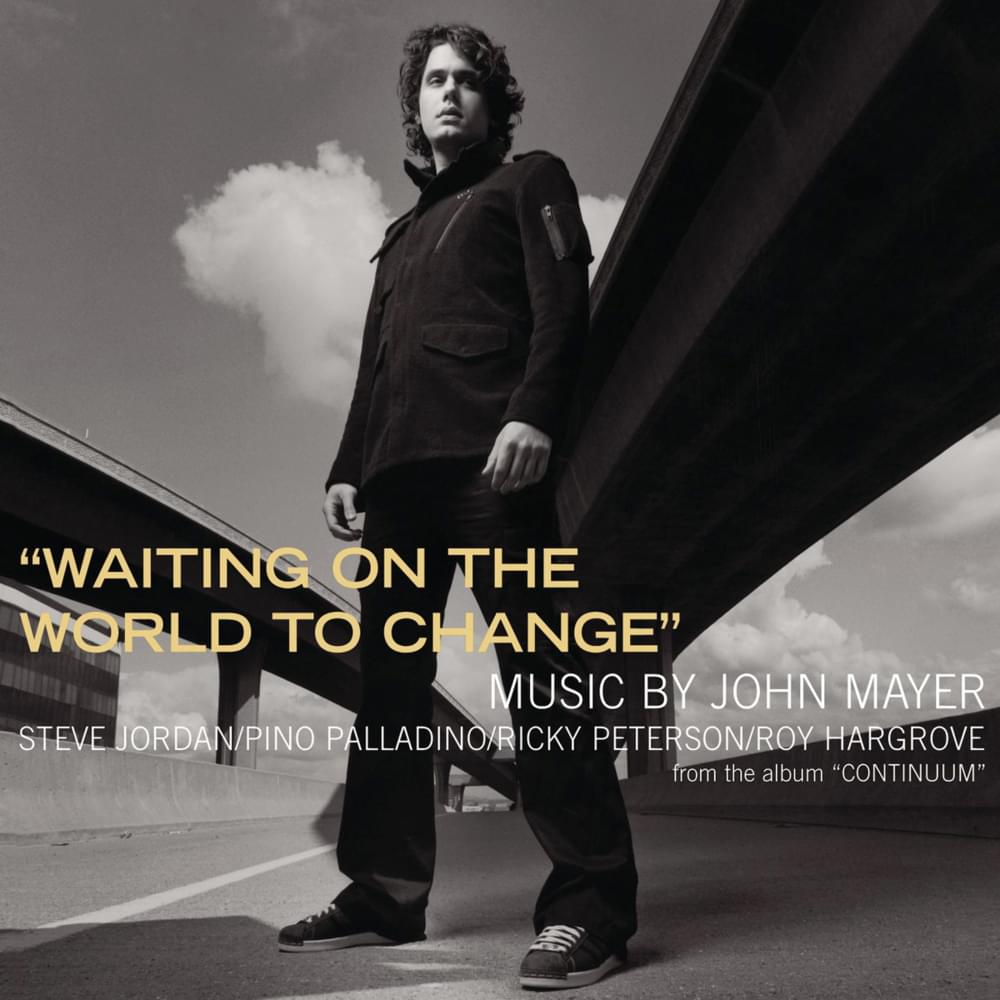
Back in 2006, musician John Mayer released a song for millions of twenty-first century young adults. It was called, “Waiting on the World to Change.” 

While the tempo is upbeat and cheerful, the lyrics represent a melancholy, even despondent mood. They express a powerlessness to make any difference; that the power lies with “the man.” So, our job, Mayer notes, is to wait for the needed change. Instead of taking charge of our lives, we’re encouraged to just wait for external change to happen. 

This may explain the cynical, even jaded, mood of millions from Generation Z.

A Shift in Culture 

Over the last sixty years, young people have slowly drifted toward this mindset. Research psychologist, Dr. Julian Rotter, created a scale to measure whether graduates were entering their careers with an external or internal locus of control. Here’s what he measured: 

  • Internal locus of control represents a mindset that believes that you are responsible and in control of your own success. 
  • External locus of control represents a mindset which believes that somehow fate or external forces control your outcomes. 

Interestingly, nine years into his research, Dr. Rotter discovered that those who maintain an internal locus of control become measurably more successful in life. They take better care of their health and fitness, their marriage and family, their job and career. It makes sense. If we believe our success is up to us, we take ownership of our behavior and attitude. This is good news. The bad news, however, is sobering. Since Julian Rotter first administered these evaluations in 1954, students have shifted toward an external locus of control. They’re looking outward to someone else to ensure their success—mom, dad, employer, counselor, or coach. 

We can only assume why this might be. Perhaps students are scared or uncertain about life. It might be that they’re simply overwhelmed. Maybe they think no one is really in control. This, however, leads to feeling like someone else owes you. 

Are We Benchwarmers?

Consider this: We approach life either as players in the game or substitutes on the bench. 

Athletes feel something completely different based on whether they are in the competition or on the bench during a tough game. From the bench, you can yell and scream, stand up, or squeeze a towel in your hands, but that’s it. You can’t directly impact the outcome when you’re not actually playing. It’s only when you’re in the game, playing, that you feel different. 

The key shifts we must help students make to return to an internal locus of control are:

  1. How they see their life (their perception).
  2. How they approach their life (their practice).

They must stop looking at externals that may go wrong. That’s not in their control. Life will give us lemons, as they say. Where students must focus is how they perceive it all, concentrating on their responses to the lemons, not the lemons themselves. That’s in their control. Once they nail their perception of life, maintaining a “control the controllable” mindset, life gets better. 

Next, they must act in response to that internal mindset.  

Arthur Brooks, one of my favorite authors, recently released a book called Build the Life You Want. In it, he tells the story of his mother-in-law who, at age 93, was one of the happiest people he’d ever known. Her name was Alpina, and she lived in her room alone, impoverished, and dying after a long life. But she was happy. The reason? Somehow, at age 45, “she stopped waiting for the world to change and took control of her life.”

How Do We Do This?

First, Alpina began to look for decisions in her life where once there were only impositions. For example, Alpina once felt she was stuck in a bad job at a pitiful company. Then she awakened to the fact that she’d been CEO all along. She couldn’t snap her fingers and all would be perfect, but she had power over her own life wherever it was, embracing an internal locus of control. 

Second, she took action based on that realization. She switched from wishing others were different to working on the one person she could control: herself. The choices she made, not her feelings at the time, led her to transform less productive emotions into positive ones like humor, gratitude, hope, and compassion. Happiness was not a chase but a choice.

Third, managing herself freed Alpina to focus on the foundations on which she could construct a much better life: her family, her friendships, her work, and her faith. Instead of numbing the pain anyone can feel inside, these types of people think and act differently. Oprah Winfrey calls them the “people who have every reason to be unhappy and yet are not.” They’re the “lemonade-making, silver-linings-finding, bright-side-looking, glass-half-fullers.”

This completely removes the chore of waiting for the world to change.

Six Crippling Realities We Must Address in Today’s Kids: Part One

Six Crippling Realities We Must Address in Today’s Kids: Part One

BehaviorCulture

Original Article and more from Tim Elmore Here

October 10, 2023

I spoke to an audience of parents recently and found a common thread among their concerns for their children. One after another shared how their child or teen: 

  • Needed extra attention to complete assignments. 
  • Was easily upset or paralyzed by normal hardships.
  • Hesitated to take on new projects or opportunities.  
  • Struggled to adapt to new situations.

Unfortunately, this is a pattern I hear too often from educators, parents, coaches, and employers. The issues below have diminished the drive for maturation in many kids. I see less holistic maturation and more categorical maturation. Too many teens, for instance, have lower aspirations to get their driver’s license when they’re eligible. They’re less likely to move out of a parent’s home as adults, and they prolong their adolescence as they postpone various adult responsibilities. Truth be told, adolescence is expanding on both sides: kids enter adolescence earlier, being exposed to realities sooner, yet they remain in it longer, postponing adult tasks.

To be clear, I’m not suggesting that all of these current realities are terrible. Throughout history, adulthood has arrived at different ages in cultures around the world. I’m only suggesting that if our young adults are capable of growth and progress and we let them settle for less, we’ve failed in our job as caring adult leaders. 

My goal in this brief series is to identify the handicaps today’s emerging generation faces and then identify how caring adults can compensate for these through our healthy responses. 

1. Exposure is up. Experience is down.

We all recognize that children are exposed to information earlier than in past generations, thanks to our portable devices. Some nine out of ten preschoolers are on a tablet by age four. Simultaneously, however, parents have been so safety conscious that we’ve removed some traditional risk-taking behaviors for fear kids will be endangered, such as exploring on their own, walking to a community park, or even riding their bikes outside the neighborhood. As a parent, I recognize how unsafe our world seems today, but the data shows it’s actually safer than it was when I was a child. The 24/7 news cycle has cultivated fear-based leadership: we fear abductions, accidents, and litigation. Social researchers confirm, however, that calculated risks accelerate their maturation in a way no video or lecture can. Motor skills and their prefrontal cortex develop as they take risks through independent experiences. Without them, we cultivate “artificial maturity,” which looks real but is only cognitive, not holistic growth. 

What should we do? Create a plan to allow kids to try new things, to enjoy experiences that are unpredictable or unguaranteed. These should be age-appropriate and calculated to expand their perspective and mature them socially and emotionally. Eventually, these experiences should be unsupervised. They can include climbing the jungle gym at five; riding a bike to unfamiliar places at eight; trying a job at twelve; driving a car as soon as it’s legal; traveling without parents, etc. Many teens from Generation Z not only suffer from FOMO (fear of missing out) but FOMU (fear of messing up). We must nudge them to try new, scary experiences, proving that failure isn’t fatal but rather helps them to grow in the process. Messing up (and learning from it) prepares them for young adulthood. 

2. Stimulation is up. Critical thinking is down.

We’ve all become accustomed to the constant pinging of our smartphones: notifications, text messages, alerts, pop-ups, you name it. I have no doubt, we are the most stimulated generation in history. Sadly, the unintended consequence is we begin to depend on the ping or the ring and fail to pause and reflect on our own. We slip into reactionary mode and seldom make time for critical thinking, where we analyze or evaluate an idea without the input of someone else. I read recently that seventy percent of Americans do not think on their own and an equal amount don’t know basic facts about their country, according to a report by Rachel Quigley in The Daily Mail. They allow commercials, pop-ups, ads, and billboards to tell them what to do. It’s alarming. If there’s truth in this statistic, we’re not in good shape to shape the future. When stimulation is high, we begin to play defense rather than offense in our lives. We can become overwhelmed with thousands of messages coming at us daily. In this state of exhaustion, we tend to look to others for endorsements or direction on what to buy, where to travel, who to know…almost everything. Obviously, this isn’t evil, but we become imitators, not originators. 

What should we do? Look at their calendar and together plan for margin in the coming weeks. Choose to cut some of the noise and clutter from their days. Margin will save us going forward. Then, begin to talk about the input you receive on a regular basis. Debrief movies, textbooks, conversations they had, news stories and classes. Process how to think about them. When they share opinions, ask them to communicate their reasoning. I did this with my kids as they grew up. We enjoyed countless Starbucks drinks, evaluating and thinking critically about these items. Today, children need to take time to think and form their own perspectives, apart from their parents. Teach them to affirm who they are, so they don’t seek so much validation from others.

This is the first part of a three-part series. In next week’s post, I will continue this list of crippling realities and what to do about them. To read part two of the series, click here

Parenting Your Sixth Grader

As a new 6th Grade Parent, I know that this Middle School Phase can be a challenge, especially as you are new at literally everything in the world of school classes, developmental conversations, orthodontics, food intake, and much… much… MORE!!!

This resource is a simple guide to help YOU AS A PARENT focus in on some key needs in the Middle School Phase.

Parenting Your Sixth Grader

MAKE THE MOST OF EVERY PHASE IN YOUR CHILD’S LIFE

You have approximately 936 weeks from the time your child is born until he or she graduates from high school. It goes by fast, and kids change and grow so quickly. It’s as if they change just as you’re starting to figure them out. It all makes the responsibility to shape a child’s faith and character feel overwhelming.

Parenting Your Sixth Grader is a concise guide that simplifies what you need to know about sixth graders in general and offers interactive ways to discover more about your own sixth grader to help you make the most of this phase.

Discover …

  • what’s changing about your child over the next 52 weeks,
  • the 6 things your child needs most,
  • and 4 conversations to have in this phase.

About the Phase Guides

Parenting Your Sixth Grader is part of a series of books designed especially for busy people. These guides are more than a “journal” but less than a detailed “manual.” Use this book to look ahead at key ways your child will be growing this year: physically, mentally, socially, emotionally, and spiritually. Jot down thoughts and observations to help you make the most of this phase.

For more, check out other books in this series: Don’t Miss It, a concise volume to help you parent every week like it counts, and It’s Just a Phase, an in-depth look at each phase, especially for church leaders. These resources are designed in partnership with Parent Cue (ParentCue.org).

About the Phase Project

The Phase Project, including this guide, is a synthesis of personal experience, academic research, and gatherings of leaders and educational experts from across the child development spectrum.

Advent Day 5

Hope: Week One—Day Five

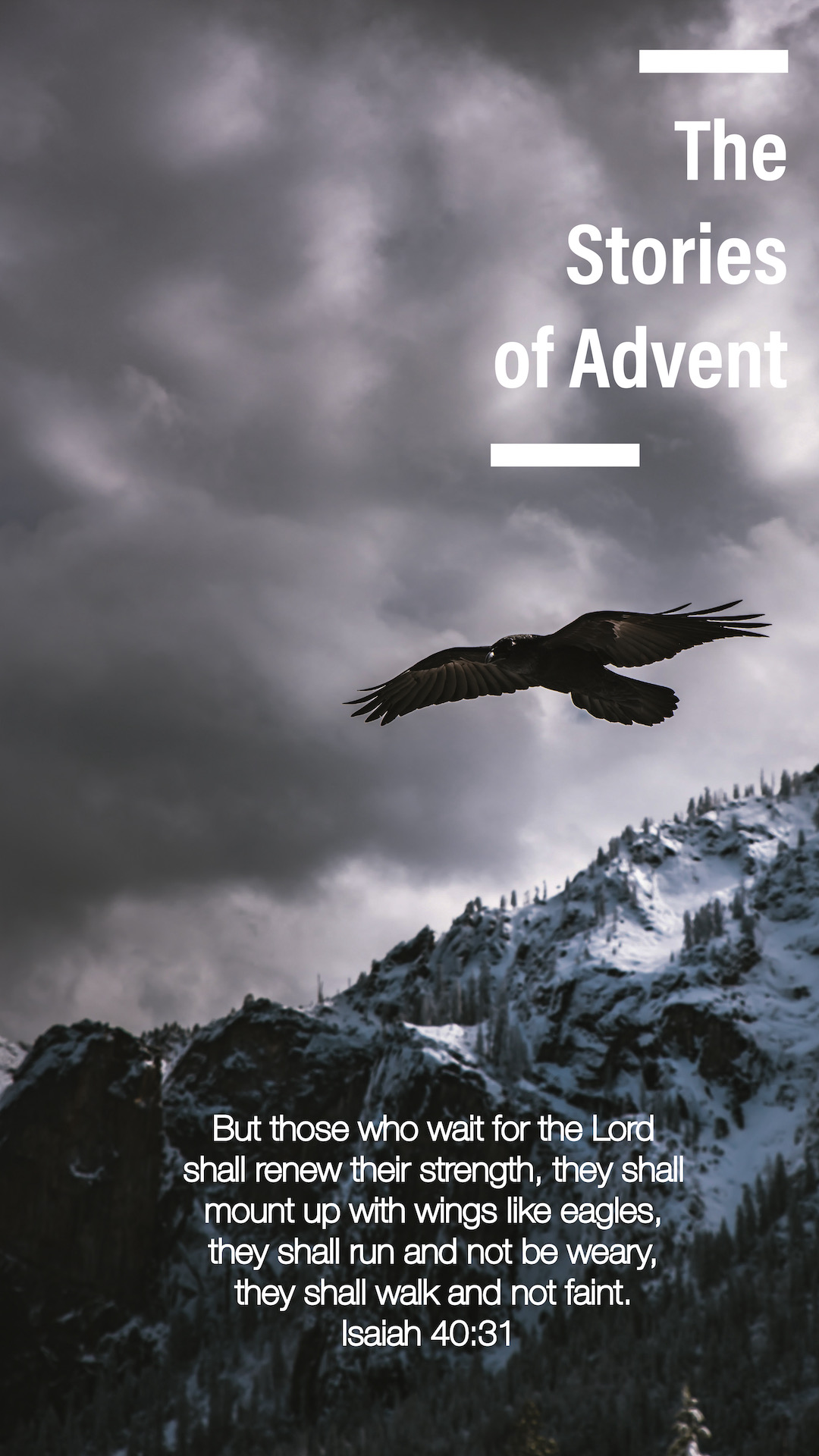
But those who wait for the Lord shall renew their strength, they shall mount up with wings like eagles, they shall run and not be weary, they shall walk and not faint. – Isaiah 40:31 (NRSV)

This year has felt like a marathon. There has been so much stress, anxiety, bitterness, and obstacles. Nothing has been normal. I feel like if I hear the phrase “uncertain times” one more time I am going to explode. We really need some certain times if you ask me. We need new energy. We need some encouragement.

In Hebrew, the word “wait” can also mean “hope.” We talked about the connection between waiting and hoping in our last devotion. We discussed how God calls us to practice hope with patience and imagination. But this verse introduces another element to hope which God promised to provide: strength.

Waiting can take a lot of energy out of you. Without God’s intervention we can become discouraged or exhausted by the circumstances in which we find ourselves. But God promised if you wait for Him, if you put your hope in Him, He will renew your strength. It is a message of endless endurance and profound support. Isaiah presents us with a heroic image of a runner who never gets tired, and paints us a picture of a majestic bird soaring above all troubles.

This verse reminds me of where we find hope in our Christmas hymns. There’s a line in “O Holy Night” which goes: “A thrill of hope – the weary world rejoices, For yonder breaks a new and glorious morn!”

I love the idea that hope is thrilling. There’s an energy and strength behind hope. It feels like electricity animating our very bones.

The hope of God is not a weak and fragile thing. God’s hope is dynamic and strong. It energizes us in the midst of “uncertain times.” It makes us agile enough to overcome the most challenging of obstacles. God’s hope is thrilling and brings joy to all the world.

Maybe this seems unattainable to you. Maybe you are weary from a year of uncertainty. Engage God in conversation. Ask for the strength and thrill of hope this Advent.

At Home Devos on Instagram

Here are links to the AT HOME DEVOS posted these past two weeks. THANK YOU to all that have shared!

View this post on Instagram

Student Leader Amazingness

A post shared by OakwoodMS (@oakwoodms) on

View this post on Instagram

Student Leader At Home Devo

A post shared by OakwoodMS (@oakwoodms) on

View this post on Instagram

Student Leader At Home Devo

A post shared by OakwoodMS (@oakwoodms) on

OSM LIVE THIS WEDNESDAY

We are on our Second Week of OSM LIVE!

If you want to catch up on the action from last week, check out our OSM YouTube Here.

We are TACKLING some of the LIFE QUESTIONS our students might have as they grow on their journey with Jesus.

Here is a LIFE QUESTIONS guide as we highlight Two Questions this week on our OSM LIVE video.

Sunday Services On YouTube Here

How are you doing during the Quarantine Days???

We are praying for you and your family. Please contact me by email at Brandon.Best@oakwoodnb.com for prayers, needs, or just to touch base.