

We have launched a brand new Middle School Curriculum that is laser focused on this age group.
Check out our Parent Resource Page Here
We have launched a brand new Middle School Curriculum that is laser focused on this age group.
Check out our Parent Resource Page Here
Check out RYAN FONTENOT and his 210Apparel for that ONE more Christmas Gift you needed.

Writer: Sean McDowell
Check out the Interlinc Blog Here
The historical fact of the resurrection is the very foundation for the Christian faith. It is not an optional article of faith—it is the faith! The resurrection of Jesus Christ and Christianity stand or fall together. One cannot be true without the other. Belief in the truth of Christianity is not merely faith in faith—ours or someone else’s—but rather faith in the risen Christ of history. Without the historical resurrection of Jesus, the Christian faith is a mere placebo. Worship, fellowship, Bible study, the Christian life and the church itself are worthless exercises in futility if Jesus has not been literally and physically raised from the dead. Without the resurrection, we might as well forget God, church and following moral rules and “feast and drink, for tomorrow we die!” (1 Corinthians 15:32).
On the other hand, if Christ has been raised from the dead, then He is alive at this very moment, and we can know Him personally (see 1 Corinthians 15:4). Our sins are forgiven (see v. 3), and He has broken the power of death (see v. 54). Furthermore, He promises that we too will be resurrected someday (see v. 22). We can trust Him because He is sovereign over the world (see v. 27). He will give us ultimate victory (see v. 57), and He has a plan for our lives (see v. 58).
The Centrality of the Resurrection
The resurrection has been the focus of the church since its inception. The New Testament book of Acts, which tells the story of the beginning of the Christian church, illustrates this well:
Paul refers to the resurrection of Jesus 53 times in his letters. Most of these texts assert the primacy of the resurrection, the assurance it gives us of our own future bodily resurrection or both. He emphasizes the centrality of the resurrection in his letter to the Thessalonians: “For they themselves report about us what kind of a reception we had with you, and how you turned to God from idols to serve a living and true God, and to wait for His Son from heaven, whom He raised from the dead, that is Jesus, Who rescues us from the wrath to come.” (1 Thessalonians 1:9-10, NASB, emphasis added).
British scholar N.T. Wright explains how central the resurrection has been in the life of the church:
There is no form of early Christianity known to us—though there are some that have been invented by ingenious scholars—that does not affirm at its heart that after Jesus’ shameful death God raised Him to life again. Already by the time of Paul, our earliest written records, the resurrection of Jesus is not just a single detached article of faith. It is woven into the very structure of Christian life and thought.
Atheist Gerd Ludemann Gets It Right
Even Gerd Ludemann, an atheist scholar who has severely criticized the Gospels for their supernatural content, recognizes the importance of the resurrection to Christianity. He explains, “The resurrection of Jesus is the central point of the Christian religion. . . . Evidently everything quite simply depends on the event of the resurrection of Jesus.” We may disagree with Ludemann about the fact of the resurrection, but he hit the nail on the head regarding its importance.
To say that Jesus, His early apostles and the Christian church has placed significant emphasis on Jesus’ resurrection is to put it mildly. Everything Jesus taught and lived for depended upon His death and resurrection. All the promises and prophecies in the Bible depend on the resurrection. The whole history of God’s plan to restore His relationship with man and woman depends on the resurrection. It is not overstating the facts at all to say that the resurrection of Jesus is the single most important event in the history of the world. Your life and mine depends on the resurrection.
Sean McDowell, Ph.D. is a professor of Christian Apologetics at Biola University, a best-selling author of over 15 books, an internationally recognized speaker, and a part-time high school teacher. He’s also a long time Member of Team interlinc. Follow him on Twitter: @sean_mcdowell and his blog: seanmcdowell.org.

From Team interlinc: Here’s a brand new Rockin’ Resurrection Day Playlist to share with your students https://open.spotify.com/playlist/3DzpHzwtIXAAVtBIRPLrzI?si=776c7c4454fe485c

A couple thousand years ago, there were some devout followers of God. They were in search, somehow, with all their resources, to an answer that many looked forward to across the ages. A leader to establish a Kingdom that would reign for eternity.
It was as if these seekers knew without a doubt that something was up. It could have been culture and society that pointed to a certain time of arrival. It might have been ancient writings that described a prophetic calendar that matched up to this moment. Other leaders began to speak of a certain time being near. Whatever it was, these men used all that they had at their disposal. They watched the stars. They read the manuscripts. They waited in anticipation, and then, one day, God, Himself, clearly pointed the way.
-Now after Jesus was born in Bethlehem of Judea in the days of Herod the king, behold, wise men from the east came to Jerusalem, saying,
“Where is he who has been born king of the Jews?
For we saw his star when it rose and have come to worship him.”
Out of the East, some peculiar men began a journey. After putting aside all their other ambitions, appointments, and family commitments, they began a journey to find a king. They found “ a King,” but what they were looking for was not in this place.
-When Herod the king heard this, he was troubled, and all Jerusalem with him;
I believe here in America, we have stopped searching for a King. After all, we pride ourselves on winning the war between the tyranny of an earthly king and the rights of individuals. This is empowering. This brings freedom.
However, this also makes us kings of our own realms. We might not be searching for a king, but like the wisemen, with all the resources and knowledge at their disposal, we are looking in the wrong place for a king. We look to ourselves in our seeking. Like the wisemen, we need direction from the Word of God.
-and assembling all the chief priests and scribes of the people, he inquired of them where the Christ was to be born.
They told him, “In Bethlehem of Judea, for so it is written by the prophet:
“‘And you, O Bethlehem, in the land of Judah, are by no means least among the rulers of Judah;
for from you shall come a ruler who will shepherd my people Israel.’”
These men found direction from both the sky above and the ancient texts from below. On their journey, the Word of God points them the correct way, while another King has motives of his own.
-Then Herod summoned the wise men secretly and ascertained from them what time the star had appeared.
And he sent them to Bethlehem, saying,
“Go and search diligently for the child, and when you have found him, bring me word, that I too may come and worship him.”
After listening to the king, they went on their way.
With knowledge and direction, these three wisemen, who might have been kings themselves, seek after the greatest treasure to be found. All of their encounters, all of their travels, lead them to this point. Their reaction explains what they have found.
-When they saw the star, they rejoiced exceedingly with great joy.
And going into the house, they saw the child with Mary his mother, and they fell down and worshiped him.
The mystery in this search for a king has now been revealed. The reaction is exceedingly great joy and worship of the true king. What they searched for, they found.
-Then, opening their treasures, they offered him gifts, gold and frankincense and myrrh.
And being warned in a dream not to return to Herod, they departed to their own country by another way.
Have you found what you have been looking for? You might even think to be a wise king yourself.
Do you have exceedingly great joy and satisfaction as you rule the day?
I believe Jesus Christ, the true King, is what you might have been searching for.
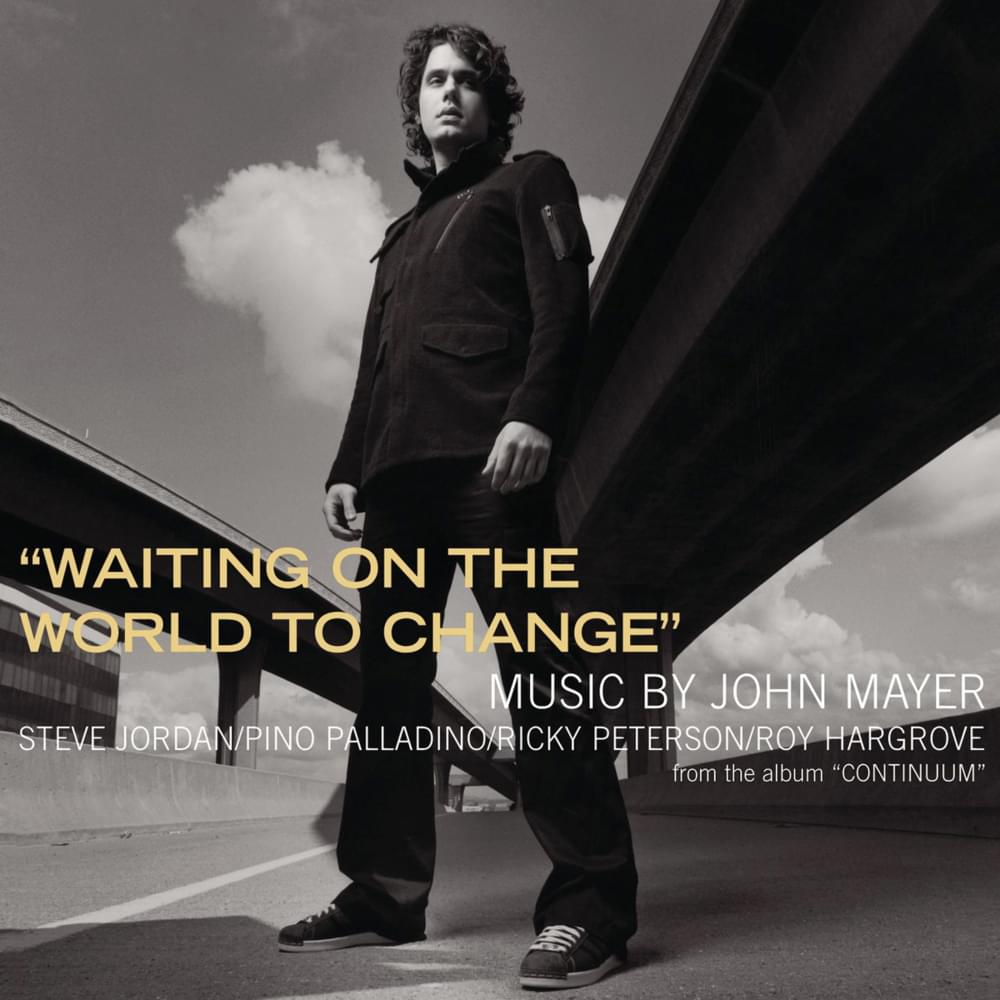
Back in 2006, musician John Mayer released a song for millions of twenty-first century young adults. It was called, “Waiting on the World to Change.”
While the tempo is upbeat and cheerful, the lyrics represent a melancholy, even despondent mood. They express a powerlessness to make any difference; that the power lies with “the man.” So, our job, Mayer notes, is to wait for the needed change. Instead of taking charge of our lives, we’re encouraged to just wait for external change to happen.
This may explain the cynical, even jaded, mood of millions from Generation Z.
A Shift in Culture
Over the last sixty years, young people have slowly drifted toward this mindset. Research psychologist, Dr. Julian Rotter, created a scale to measure whether graduates were entering their careers with an external or internal locus of control. Here’s what he measured:
Interestingly, nine years into his research, Dr. Rotter discovered that those who maintain an internal locus of control become measurably more successful in life. They take better care of their health and fitness, their marriage and family, their job and career. It makes sense. If we believe our success is up to us, we take ownership of our behavior and attitude. This is good news. The bad news, however, is sobering. Since Julian Rotter first administered these evaluations in 1954, students have shifted toward an external locus of control. They’re looking outward to someone else to ensure their success—mom, dad, employer, counselor, or coach.
We can only assume why this might be. Perhaps students are scared or uncertain about life. It might be that they’re simply overwhelmed. Maybe they think no one is really in control. This, however, leads to feeling like someone else owes you.
Are We Benchwarmers?
Consider this: We approach life either as players in the game or substitutes on the bench.
Athletes feel something completely different based on whether they are in the competition or on the bench during a tough game. From the bench, you can yell and scream, stand up, or squeeze a towel in your hands, but that’s it. You can’t directly impact the outcome when you’re not actually playing. It’s only when you’re in the game, playing, that you feel different.
The key shifts we must help students make to return to an internal locus of control are:
They must stop looking at externals that may go wrong. That’s not in their control. Life will give us lemons, as they say. Where students must focus is how they perceive it all, concentrating on their responses to the lemons, not the lemons themselves. That’s in their control. Once they nail their perception of life, maintaining a “control the controllable” mindset, life gets better.
Next, they must act in response to that internal mindset.
Arthur Brooks, one of my favorite authors, recently released a book called Build the Life You Want. In it, he tells the story of his mother-in-law who, at age 93, was one of the happiest people he’d ever known. Her name was Alpina, and she lived in her room alone, impoverished, and dying after a long life. But she was happy. The reason? Somehow, at age 45, “she stopped waiting for the world to change and took control of her life.”
How Do We Do This?
First, Alpina began to look for decisions in her life where once there were only impositions. For example, Alpina once felt she was stuck in a bad job at a pitiful company. Then she awakened to the fact that she’d been CEO all along. She couldn’t snap her fingers and all would be perfect, but she had power over her own life wherever it was, embracing an internal locus of control.
Second, she took action based on that realization. She switched from wishing others were different to working on the one person she could control: herself. The choices she made, not her feelings at the time, led her to transform less productive emotions into positive ones like humor, gratitude, hope, and compassion. Happiness was not a chase but a choice.
Third, managing herself freed Alpina to focus on the foundations on which she could construct a much better life: her family, her friendships, her work, and her faith. Instead of numbing the pain anyone can feel inside, these types of people think and act differently. Oprah Winfrey calls them the “people who have every reason to be unhappy and yet are not.” They’re the “lemonade-making, silver-linings-finding, bright-side-looking, glass-half-fullers.”
This completely removes the chore of waiting for the world to change.

Merry Christmas!!!!

Original Article and more from Tim Elmore Here
I spoke to an audience of parents recently and found a common thread among their concerns for their children. One after another shared how their child or teen:
Unfortunately, this is a pattern I hear too often from educators, parents, coaches, and employers. The issues below have diminished the drive for maturation in many kids. I see less holistic maturation and more categorical maturation. Too many teens, for instance, have lower aspirations to get their driver’s license when they’re eligible. They’re less likely to move out of a parent’s home as adults, and they prolong their adolescence as they postpone various adult responsibilities. Truth be told, adolescence is expanding on both sides: kids enter adolescence earlier, being exposed to realities sooner, yet they remain in it longer, postponing adult tasks.
To be clear, I’m not suggesting that all of these current realities are terrible. Throughout history, adulthood has arrived at different ages in cultures around the world. I’m only suggesting that if our young adults are capable of growth and progress and we let them settle for less, we’ve failed in our job as caring adult leaders.
My goal in this brief series is to identify the handicaps today’s emerging generation faces and then identify how caring adults can compensate for these through our healthy responses.
1. Exposure is up. Experience is down.
We all recognize that children are exposed to information earlier than in past generations, thanks to our portable devices. Some nine out of ten preschoolers are on a tablet by age four. Simultaneously, however, parents have been so safety conscious that we’ve removed some traditional risk-taking behaviors for fear kids will be endangered, such as exploring on their own, walking to a community park, or even riding their bikes outside the neighborhood. As a parent, I recognize how unsafe our world seems today, but the data shows it’s actually safer than it was when I was a child. The 24/7 news cycle has cultivated fear-based leadership: we fear abductions, accidents, and litigation. Social researchers confirm, however, that calculated risks accelerate their maturation in a way no video or lecture can. Motor skills and their prefrontal cortex develop as they take risks through independent experiences. Without them, we cultivate “artificial maturity,” which looks real but is only cognitive, not holistic growth.
What should we do? Create a plan to allow kids to try new things, to enjoy experiences that are unpredictable or unguaranteed. These should be age-appropriate and calculated to expand their perspective and mature them socially and emotionally. Eventually, these experiences should be unsupervised. They can include climbing the jungle gym at five; riding a bike to unfamiliar places at eight; trying a job at twelve; driving a car as soon as it’s legal; traveling without parents, etc. Many teens from Generation Z not only suffer from FOMO (fear of missing out) but FOMU (fear of messing up). We must nudge them to try new, scary experiences, proving that failure isn’t fatal but rather helps them to grow in the process. Messing up (and learning from it) prepares them for young adulthood.
2. Stimulation is up. Critical thinking is down.
We’ve all become accustomed to the constant pinging of our smartphones: notifications, text messages, alerts, pop-ups, you name it. I have no doubt, we are the most stimulated generation in history. Sadly, the unintended consequence is we begin to depend on the ping or the ring and fail to pause and reflect on our own. We slip into reactionary mode and seldom make time for critical thinking, where we analyze or evaluate an idea without the input of someone else. I read recently that seventy percent of Americans do not think on their own and an equal amount don’t know basic facts about their country, according to a report by Rachel Quigley in The Daily Mail. They allow commercials, pop-ups, ads, and billboards to tell them what to do. It’s alarming. If there’s truth in this statistic, we’re not in good shape to shape the future. When stimulation is high, we begin to play defense rather than offense in our lives. We can become overwhelmed with thousands of messages coming at us daily. In this state of exhaustion, we tend to look to others for endorsements or direction on what to buy, where to travel, who to know…almost everything. Obviously, this isn’t evil, but we become imitators, not originators.
What should we do? Look at their calendar and together plan for margin in the coming weeks. Choose to cut some of the noise and clutter from their days. Margin will save us going forward. Then, begin to talk about the input you receive on a regular basis. Debrief movies, textbooks, conversations they had, news stories and classes. Process how to think about them. When they share opinions, ask them to communicate their reasoning. I did this with my kids as they grew up. We enjoyed countless Starbucks drinks, evaluating and thinking critically about these items. Today, children need to take time to think and form their own perspectives, apart from their parents. Teach them to affirm who they are, so they don’t seek so much validation from others.
This is the first part of a three-part series. In next week’s post, I will continue this list of crippling realities and what to do about them. To read part two of the series, click here.


 Parent Resources